

Welcome Avatar! 2026 will be Milei’s third year in office and it looks to be a crucial one, where many of his changes will be fully baked in. Historically, the third year of the last 3 presidencies in Argentina have been the point where economic policies spiralled out of control. Will this time be different? Let’s see.
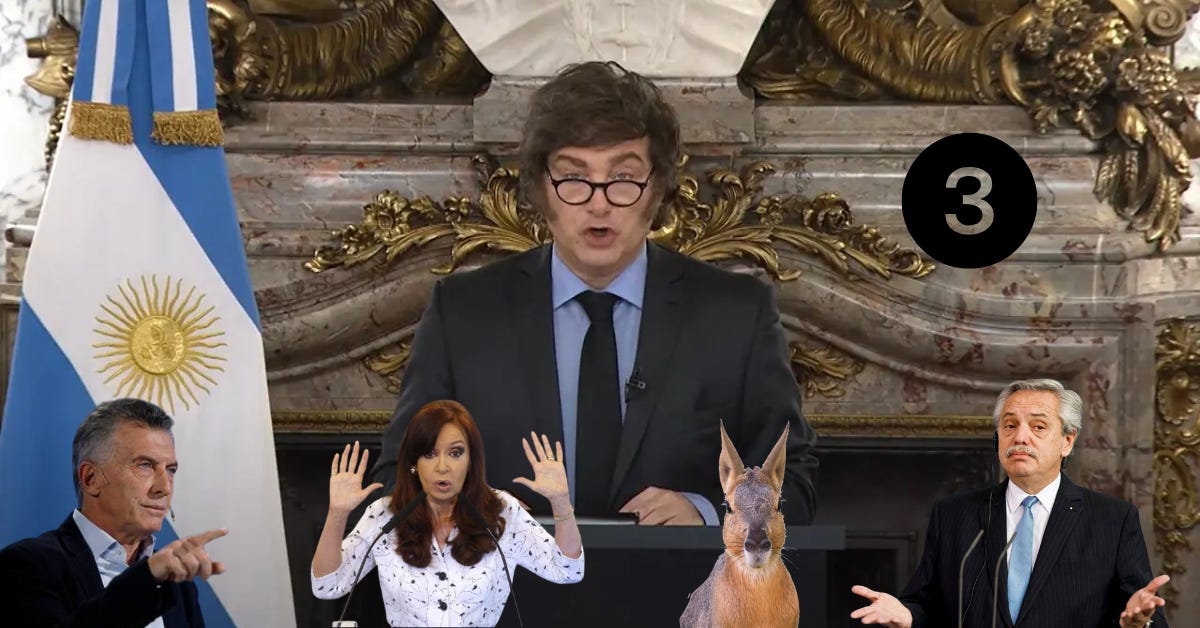
The third year usually marks a comeback of what has become known as the maldición del dólar (the dollar curse). In every single case, there was a suppressed and overvalued peso, and the BCRA was no longer able to hold the lid on a devaluation due to lack of USD firepower.
2014 marked three years since the start of Cristina Kirchner’s second presidency (2011-2015), and the same amount of time since she initiated currency and exchange controls (cepo cambiario) initiated in 2011. This culminated in a currency crisis in 2014, which led to a growing gap between the official and blue dollar (black market) rate, devaluations, capital flight, and a sharp devaluation in January 2014 after the resignation of the then president of the BCRA, Martín Redrado.
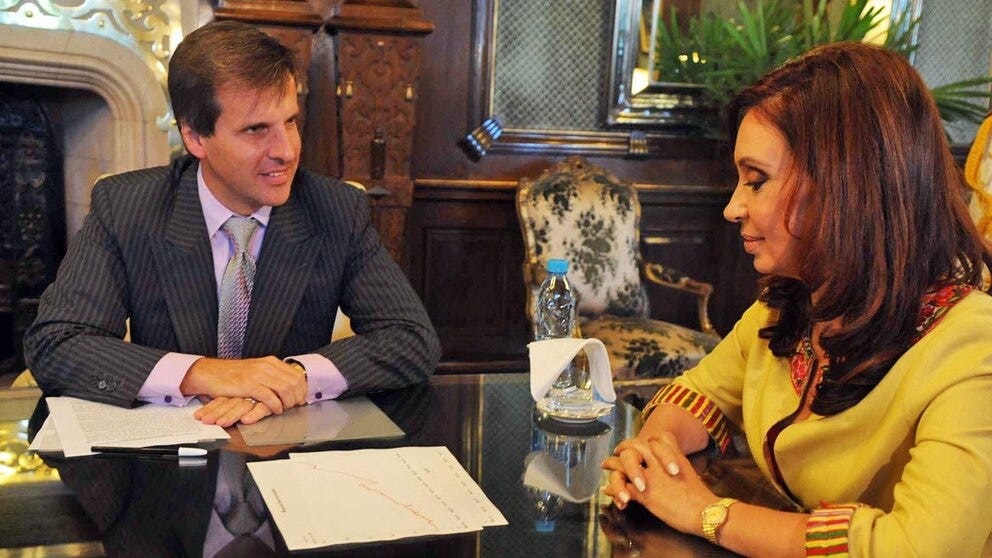
Shortly after, Axel Kicillof started as minister of economy, seeking to liberalize the market but facing a strong outflow of foreign currency, which worsened in the following years with more indebtedness and capital flight.
Eventually this situation — and the fact that the population was growing increasingly tired of the economic restrictions and a stalled market since 2011 — led to the rise of Mauricio Macri as the main opposition against Kirchnerism, and in 2015 he won the election.
Besides the inherited problems from the last Kirchner administration, one of the main issues under the Macri presidency was its gradualism and semi-fixed exchange rate, that proved to be unsustainable in 2018, and things spiralled out of control quickly, with quickly increasing inflation, and an ever devaluing peso.
Autist note — The Ghost of La Tablita goes over the main problems of Macri’s gradualist approach, and why it could also become a problem for this current administration if there is too much intervention by the BCRA to keep the exchange rate at certain ‘desired’ levels.

It all ended in tears, and the Macri administration was forced to take on the then biggest IMF loan ever in May 2018. Many of those funds were used in vain as a fire extinguisher to try to keep the peso from completely burning down, and bonds denominated in pesos (Leliqs) became one of the instruments of choice to try to lure investors into pesos versus dollars.
Eventually in the last 2 months of his term, Macri ended up reinstating the cepo, with a new limit on dollar purchases, which was the final drop that would cost him the reelection.
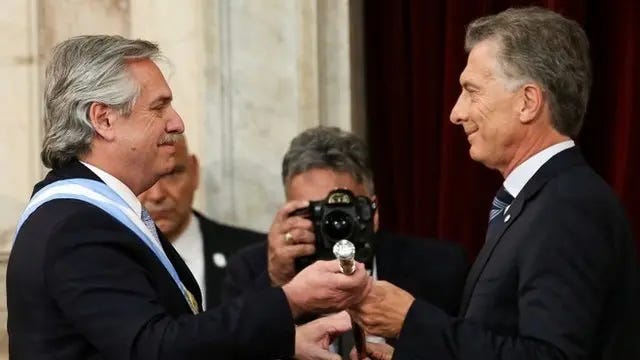
In 2019 Alberto Fernández got elected in a close victory over incumbent Mauricio Macri, and by 2022, in Fernandez’s third year in office, the Leliq-fueled bomb started at 40% interest, and was already running at 70% interest by August. Inflation was a constant throughout the Fernández presidency — both inherited and worsened by his economic policies —, and that year Argentina’s inflation would almost end in the triple digits: 94.8%.
In 2023 this spiralled out of control even further, and this constant instability was one of the many reasons Javier Milei was able to get elected as an economist.
This brings us to today. 2026 will be President Milei’s third year, and it will be a make it or break it year, just like in the previous three presidencies.