

Welcome Avatar! This month Argentina signed a trade and investment agreement with the United States, consolidating the American sphere of influence in the Southern Cone. It’s a first step of many in diminishing the political and military influence of two main BRICS members in Latin America: Russia and China. Let’s dig into the details.
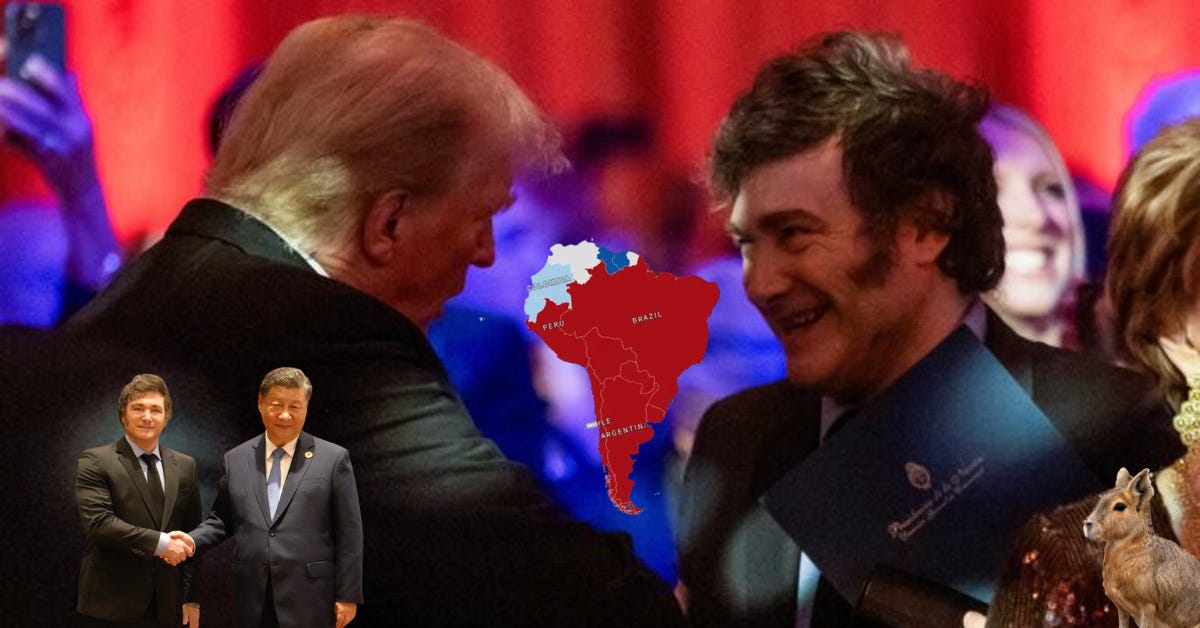
All of the ladies attending the ball
Are requested to gaze
In the faces found on the dance cards
Please then remember and don’t get too close
To one special one
He will take your defenses and runSo we change partners
Time to change partners
You must change partners
Again— Stephen Stills, Change Partners
BRICS No More
At the 15th BRICS summit in Johannesburg in 2023, just weeks before the presidential elections that would change everything for Argentina, the group announced the expansion of the group by inviting six new members, including Egypt, Ethiopia, Saudi Arabia, Iran, and the United Arab Emirates, in addition to Argentina.
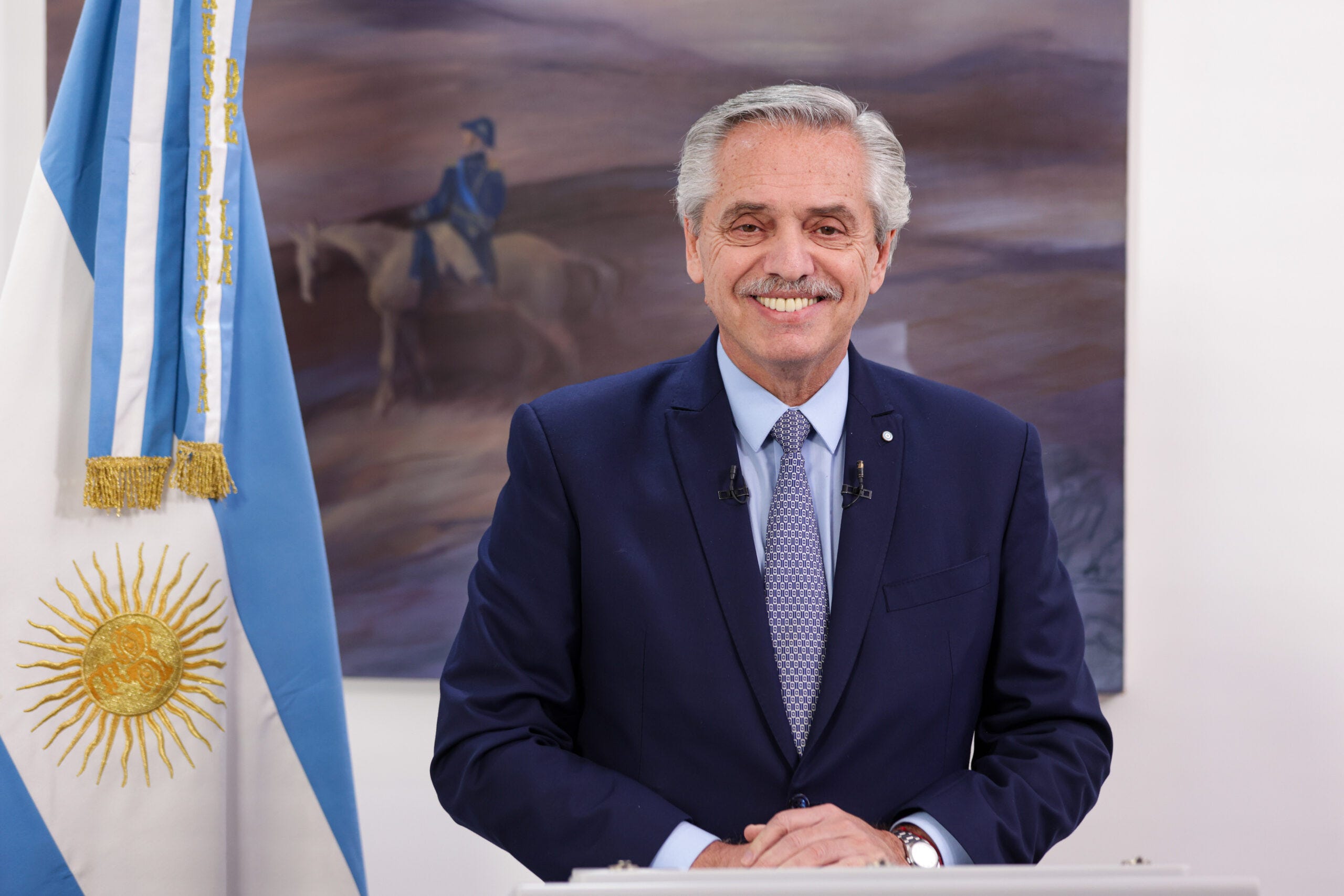
In a recorded message broadcast on the Casa Rosada’s channel, President Alberto Fernández said:
“As part of the Global South, that south full of hope and future, we have joined the BRICS alliance, the most important countries of the emerging economies.
We want to be part of the BRICS because the difficult world context confers on the bloc a singular relevance and makes it an important geopolitical and financial point of reference.”
China, which accounts for approximately 70% of the bloc’s GDP, spearheaded this expansion and Argentina’s inclusion. The idea was that Argentina would become a formal member on January 1, 2024.
Then the elections happened with Javier Milei’s win, causing a 180 degrees shift in political alliances and economic policies. During his presidential campaign, Javier Milei had already identified the United States and Israel as his government’s main strategic allies:
“Our geopolitical alignment is with the United States and Israel. We will not align ourselves with communists.”
He vowed to sever trade relations with China, Argentina’s second-largest trading partner after Brazil.
Javier Milei formalized Argentina’s resignation from the BRICS group through letters addressed to the countries of the bloc, presidential spokesman Manuel Adorni reported in December 2023, just a few days before Argentina’s membership would have become official.
Relations with China cooled down but continued, albeit at a much slower pace, without any new big infrastructure investments from China’s side. However, China did renew Argentina’s currency swap in 2025.
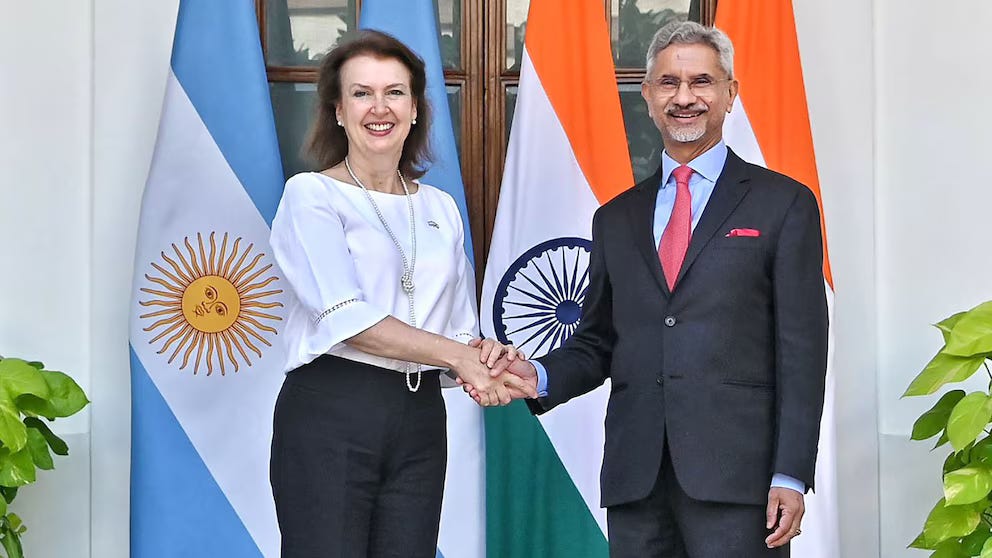
In October 2024 Argentina made an official visit to another important BRICS trading partner, India. Chancellor Diana Mondino stressed that Argentina was very much interested in individual trading deals with BRICS member countries, but just did not want to align with the bloc as a whole:
“During our trip to India, we reaffirmed that Argentina will not join the BRICS. That said, our trade relationship with each of its members, individually, has never been better. The government’s foreign policy has been and will continue to be extremely clear.”
The Pay-Off
President Javier Milei’s political stance of refusing to become a BRICS member country did eventually pay off, when political turbulence was on the horizon right before the midterm elections in October 2025. This caused significant economic instability: there was a flight to the dollar brewing after Milei’s party did not achieve convincing results in the local Buenos Aires provincial elections.
This was the moment the US decided to step in, by officializing a $20 billion USD currency swap line with the US Treasury. That calmed the waters, La Libertad Avanza had a much better midterm election than expected, and Argentina is now in the consolidation phase of the renewed US-Argentina partnership.
The United States’ renewed focus on Latin America and the Western Hemisphere in general has multiple objectives, but one of the main goals is to diminish China’s (Argentina, Brazil) and Russia’s (Venezuela) influence. I have discussed China’s influence in Argentina at length in Argentina: The Currency Battleground, It’s Raining Swaps and The Bessent Put.


Treasury Secretary Scott Bessent indicated that getting rid of the $18 billion Yuan swap line — measured in dollars, funny how that works — still on Argentina’s books was not a sine qua non for the $20 billion currency swap, but that it is much more important to get China “out of Argentina”:
“Argentina is a beacon in Latin America. President Milei has done the right thing. He is trying to break a 100 years of bad cycles in Argentina. He is also a great ally for the US. […]
He is commited to getting China out of Argentina. They’re all over the place in Latin America.”
After being asked the question whether Argentina should end the currency swap with China and the Chinese military base in Neuquén during a press conference shorty after the US currency swap confirmation, President Trump stated:
“I don’t think you should be doing business much with [China]. You can do some trade, but you certainly shouldn’t be doing [anything] beyond that.
Certainly shouldn’t be doing anything having to do with the military with China and if that’s what’s happening, I’d be very upset about that.”
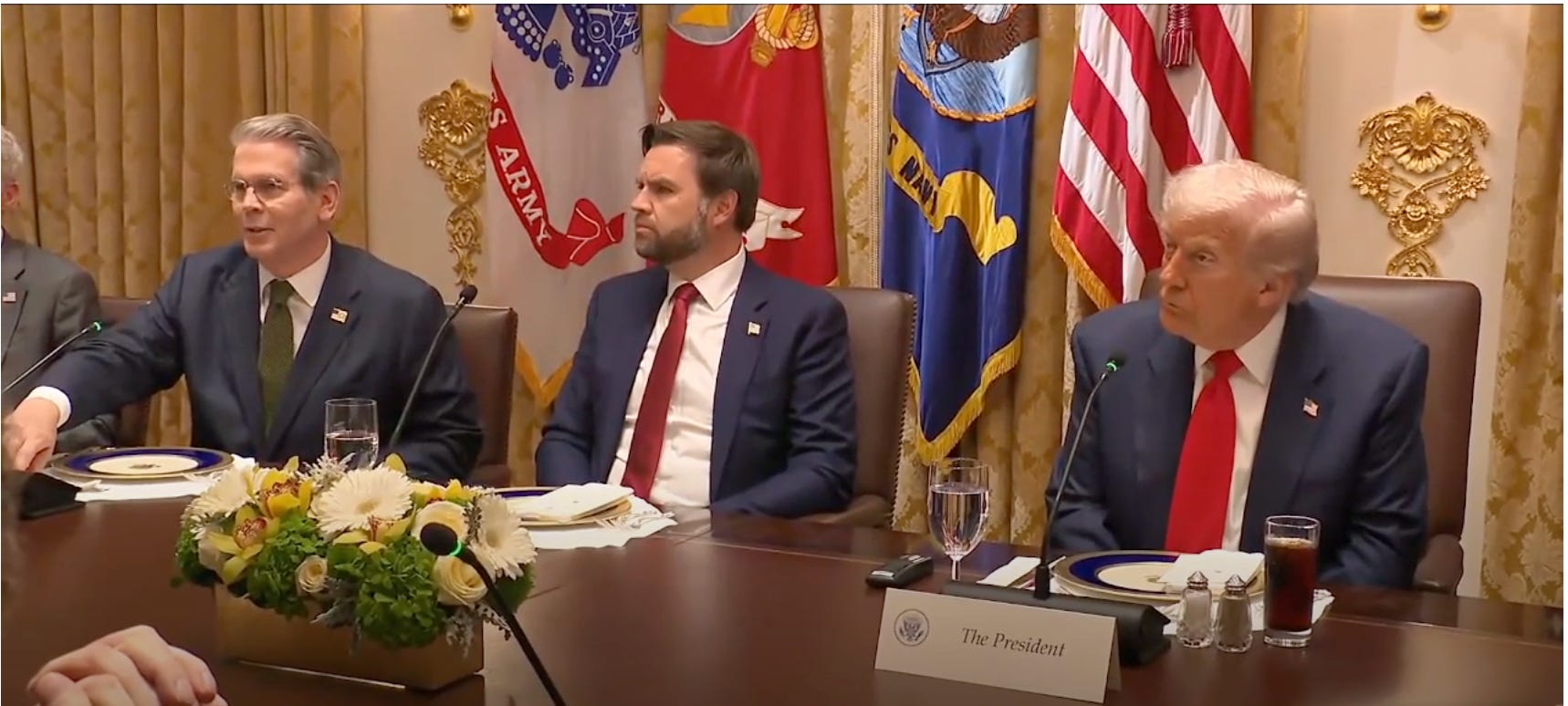
And shortly after, Bessent confirmed in that same press conference that the importance of getting China out is more related to its physical and strategic presence in Argentina, not so much to the Yuan swap:
“The American assistance is not predicated on the swap with China being closed. Any reporting to that effect is incorrect.
I was referring more to ports, military bases, observation facilities that have been created in Argentina.”
Couldn’t get much clearer than that.
Post-Swap
On November 13, the United States and Argentina announced an official trade agreement, deepening the strategic relationship and consolidating the US influence sphere in the Southern Cone.
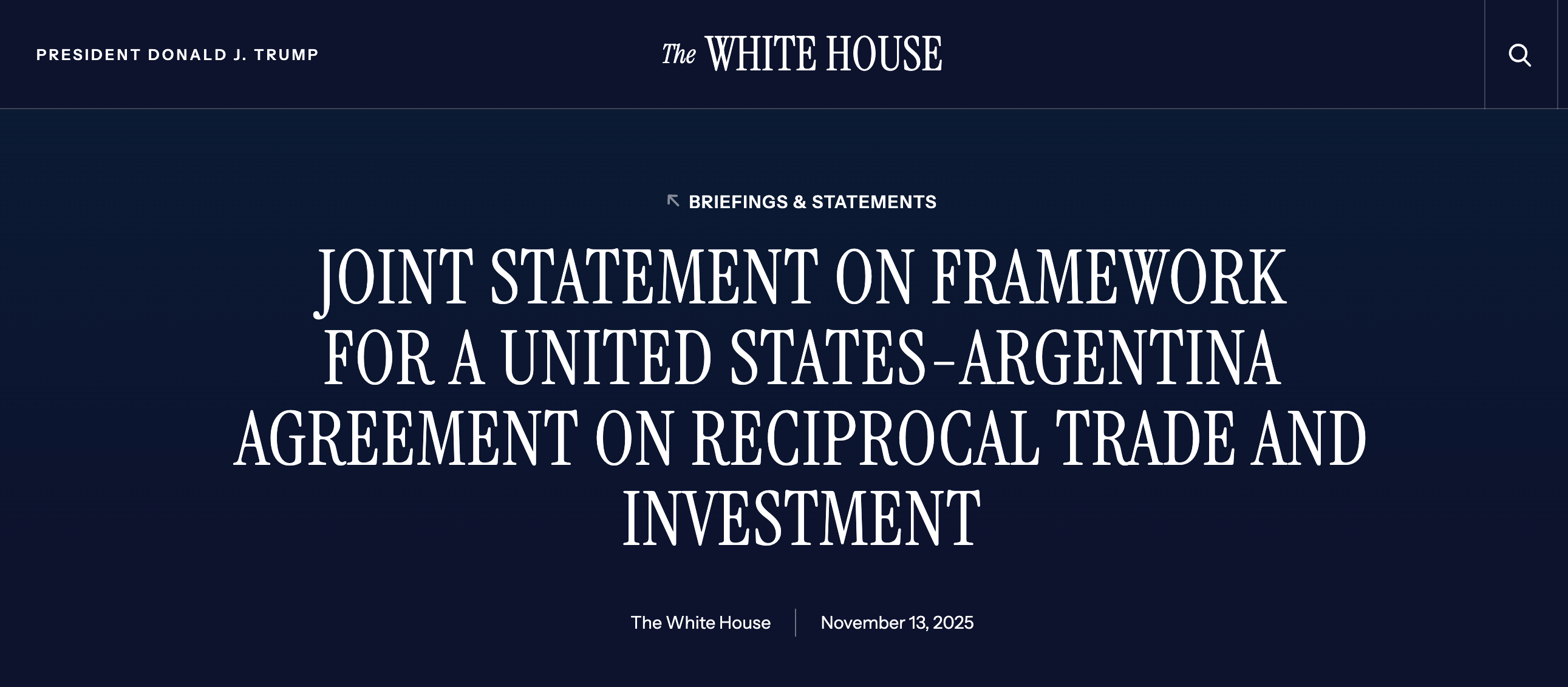
The rest of this article will go over the details and implications of the US-Argentina trade agreement, and this week’s final confirmation of a partnership with the US with regards to Argentina’s information sharing.