

Welcome Avatar! Last week, the Milei government updated the regime for importing paper with zero import tariffs. It’s almost impossible to come up with an import tariff that Argentina didn’t have, but few tariffs are stained with such a bloody history as this one.
Paper in fire
Stinking up the ashtrays
Paper in fire
Smoking up the alleyways— John Mellencamp, Paper in Fire (1987)
On January 14, 2026, the government of Javier Milei eliminated tariffs and reduced printing duties to 0% for publishing materials. The reason stems from the initiative to reduce production costs and modernize administrative processes to improve the production and distribution of materials.
This decision applies to the printing of newspapers, magazines, books, and other printed materials. This is the first time in more than 80 years that the control over paper has been liberated to such an extent.
Control Paper, Control Speech
As we have seen before in Peronist Ping Pong, Argentina has a long lasting history with freedom of press (more with the lack thereof) and censorship.
In the first two presidencies of Perón (1946-1955), the State was the main distributor of paper for newspaper, and so the government could decide which newspapers got enough of it to distribute to a wide enough audience:
At the start of 1946, during the regime initiated by the dictatorship of 1943, an Executive Order was issued that would later prove crucial for Perón to muzzle the journalistic opposition: an authorization to the Executive Branch to provide paper for newspapers.
The management of paper for printing, with different tricks, was the start of the history of violations of freedom of the press in Argentina. The annual distribution of this raw material, fundamental to written journalism, was done through other decrees.

Towards 1969 with Perón exiled in Spain, the military dictatorship headed by Juan Carlos Onganía, announced a plan to develop basic industries in the country, including the pulp and paper industry.
In August of that year, through Law 18.312, Minister of Economy Dagnino Pastore created the Fund for the Development of Paper and Pulp Production, promoting the creation of the first national newsprint and pulp company, and imposed a 10% “contribution rate” on paper imports until the Argentine paper mill was operational.
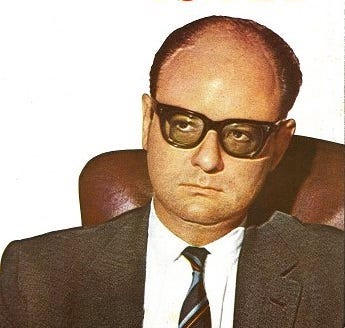
For ten years, all the country’s newspapers paid 10% of their imports to fund the construction of a plant that, ultimately, was only awarded to a select few.
