

Welcome Avatar! Exactly 35 years ago today, on December 3, 1990, the fourth Carapintada uprising took place in Argentina: it would be the last and most bloody military coup attempt to undermine democracy.
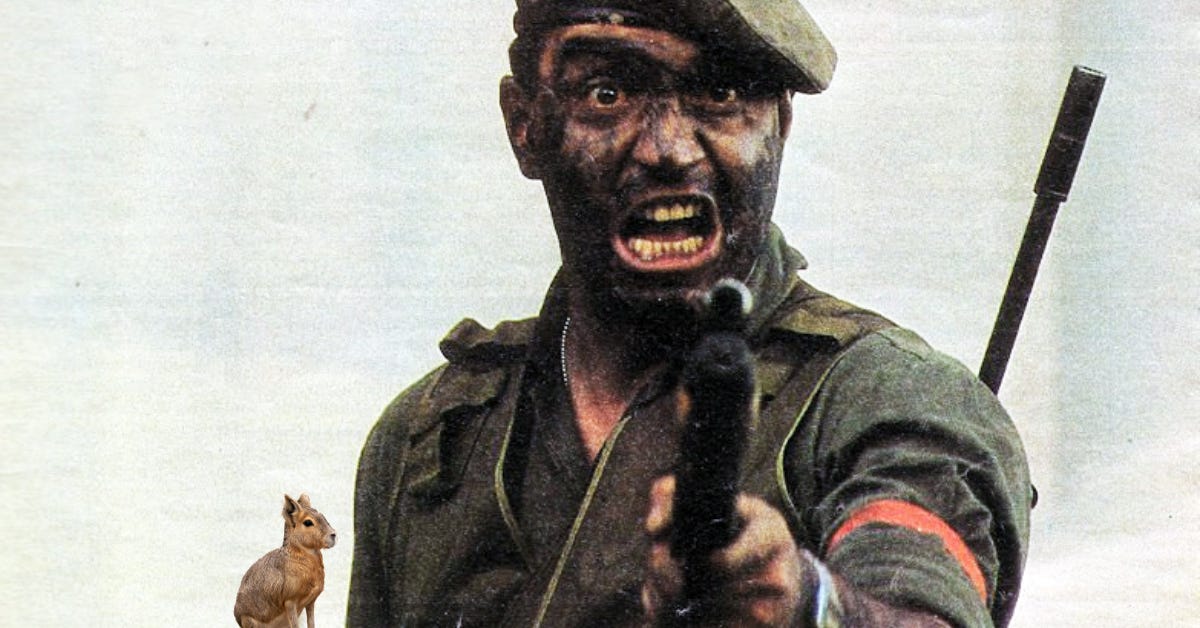
This would be the last military adventure of the 20th century, a century in which Argentina experienced quite a few. And it was also the end of the military movement known as the “carapintadas” (painted faces), which originated in the first military rebellions against the government of Raúl Alfonsín, the first in April 1987, due to the war camouflage used by the rebels to add some additional drama to their cause.
Background
The 1990 Carapintada uprising occurred within the context of a series of nationalist and right-wing military rebellions protesting the trials of military personnel from the 1976-1983 dictatorship and the policies of the Carlos Menem government.
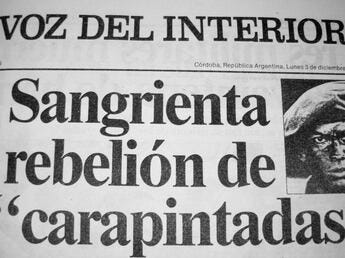
It would be the fifth against the constitutional order in Argentina since the return of democracy in 1983. The first had been between April 16 and 20, 1987; in 1988 there were two uprisings, one between January 15 and 19 and another between December 1 and 5. And then of course in January of 1989 there had also been a leftist guerrilla uprising at La Tablada.

All this transpired in an economic setting where Argentina had already blasted through 2 currencies within a few years — first the Austral, which was later replaced by the Peso again, and then the Peso itself, which hyperinflated by up to 5,000% between 1989-1991. Argentina in the 1980s was really something else.
The main complaint on the side of the Carapintadas faction in the military was that they perceived that they were going through a process of national defenselessness, and that during Raúl Alfonsín’s government there had been a process of revenge and retaliation against members of the military who had formed part of the last military Junta:
“We submitted documents, sent letters, and met with officials and politicians. We wanted an end to this policy that was destroying the armed forces. But the year was ending and we had no response. It was something we had been planning since the beginning of 1990.”