

Welcome Avatar! A federal appeals court in Argentina has declared the citizenship half of President Milei’s Decree 366/2025 unconstitutional. What it means for the two-years-without-leaving rule, Argentina’s citizenship by investment program, and finally a plug-and-play residency reform your Dutch-Patagonian rodent drafted to replace it, with the full legal text in Spanish and English at the bottom.

Argentina runs on a quiet fiction that everyone agrees to ignore until a judge decides not to. The fiction is that a president can rewrite laws passed by Congress whenever governing the normal way feels slow.
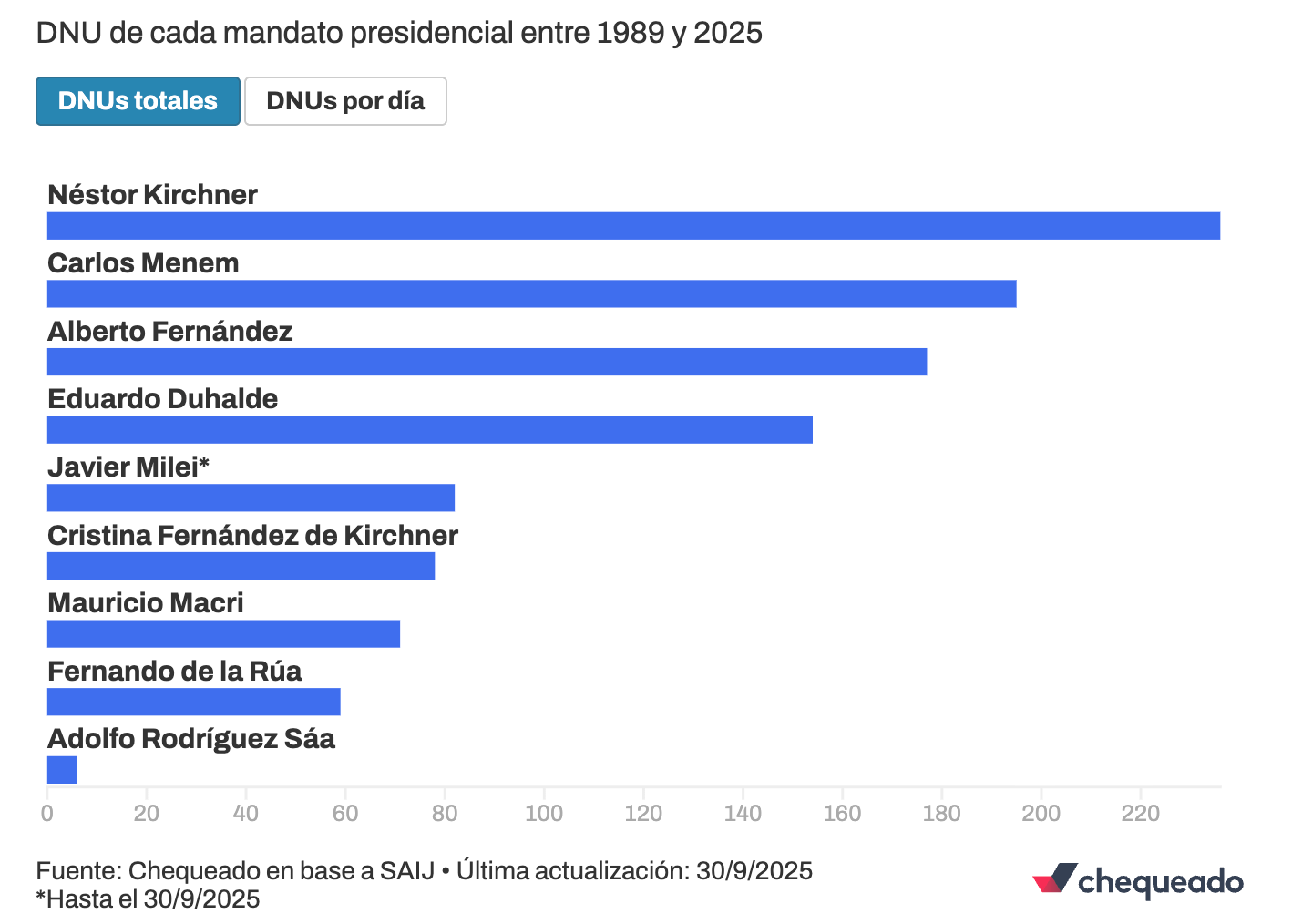
The tool for this is the decreto de necesidad y urgencia, the decree of necessity and urgency, or DNU for short. Every modern Argentine president has reached for it, and Milei has not even reached for it more enthusiastically than previous presidents (he uses it quite moderately in comparison).
Usually Milei’s Executive Orders point in a direction this four-pawed friend also likes: less state, fewer forms, ¡AFUERA!, but the citizenship part of the migration reform was definitely not part of that; it made acquiring citizenship through residency needlessly complicated, while also creating a CBI framework in tandem.

Not being allowed to leave the country even one single day within the two years prior to applying for citizenship is counter effective for precisely the residents and citizens Argentina should want to attract: business people who will travel in and out often, but still spend most of their time in Argentina as their home base. Apparently, I was no alone in that sentiment.
On June 18, 2026, a federal appeals court in Buenos Aires picked up the migration decree, and looked at the part dealing with citizenship, and ruled that it never should have been a decree at all.
The court declared the citizenship provisions of Decree 366/2025 unconstitutional, revoked a lower court that had waved them through, and ordered a federal judge to take back jurisdiction over a naturalization case the government had tried to hand off to an administrative office.
Your Southern Cone gnawer has the ruling in hand, all twelve pages of it, and we are going to go through it properly. You can also download it here (Spanish version only):

The judges in the case of this Russian-named applicant did not strike this down on a technicality, but instead reached for the deepest plumbing of the Argentine constitution and reminded the executive branch that the separation of powers is still load-bearing, even under a president who campaigned with a chainsaw.
Before anyone forwards this with the headline "Court cancels Milei's citizenship decree," let’s put a leash on that. Milei’s decree is wounded, but far from buried.
Why this particular decree flunked
Decree 366/2025 was signed on May 28, 2025. We are now one year and one month further, without a working CBI program, but that is a side note for this ruling.
The decree’s own recitals, the considerandos where the executive is supposed to explain why it could not wait, say nothing about why the legislative route was impossible. When a President claims an emergency so severe it justifies sidelining Congress through a decree, and Congress was sitting right there the whole time, you have a problem and the decree will be open for attack by the courts.

The urgency claim fared no better. Even if you grant, for the sake of argument, that fast-moving migratory flows could justify treating immigration as urgent, citizenship is a different animal.
To naturalize in Argentina you generally need two years of legal residence, a requirement that goes back to the constitution’s founders. Something that by design takes years cannot plausibly be the kind of emergency that cannot wait for a parliamentary debate.
Then the judges delivered the line that should be printed on a mug. The decree was signed in May 2025. The Dirección Nacional de Migraciones (DNM), the immigration office, only enabled the online citizenship procedure on its website on October 6, 2025, more than four months later. The instruction manual for actually doing the procedure was published in March 2026, roughly ten months after the supposed emergency.

As the court put it, these delays happened inside the very administration that invoked the urgency. Normally, arsonists do not get to declare a house fire and then spend ten months looking for the matches. So on the first and biggest question, the court’s conclusion was clean: the conditions the constitution demands for a DNU simply were not present.
Up until today, there have still been 0 citizenships processed by Migraciones, and the people online waving an Argie passport around that they just obtained are all from grandfathered court cases preceding Milei’s decree.
The defect the judges found on their own
Judges normally rule only on what the parties put in front of them. In this particular ruling, the panel flagged a second constitutional problem that the applicant had not even raised, because they felt they could not look past it.
Argentine citizenship proceedings have always involved the Ministerio Público Fiscal (MPF), the public prosecutor’s office, whose job is to defend legality and the general interests of society. It is a watchdog, and a specific law, 27.148, requires the MPF to intervene in all citizenship cases. The Supreme Court has reaffirmed this as recently as March 2026, after Decree 366/2025 was already in force.
Milei’s decree moved citizenship from federal judges to an administrative office, but it never repealed the MPF requirement and never explained how that office would be honored. It just vanished from the process.

The decree also quietly killed two old safeguards: previously, naturalization required the publication of edictos, public notices of each citizenship application, and allowed third parties to object. Both of these were gone, with nothing put in their place.
The court’s point is not nostalgia for paperwork; these were the mechanisms that let the system catch fraud, error, or someone naturalizing who should not be (a famous example of Venezuelan celebrity Catherine Fulop who was denied citizenship in 2019 for her remarks around the Holocaust). Strip them out and you have a faster process with the brakes removed.
The sharpest observation came from inside the decree itself, because it contained no judicial or administrative steps for the citizenship process that was moved to DNM, no deadlines, review mechanism, role of the prosecuter, no path to a judge or appeals.
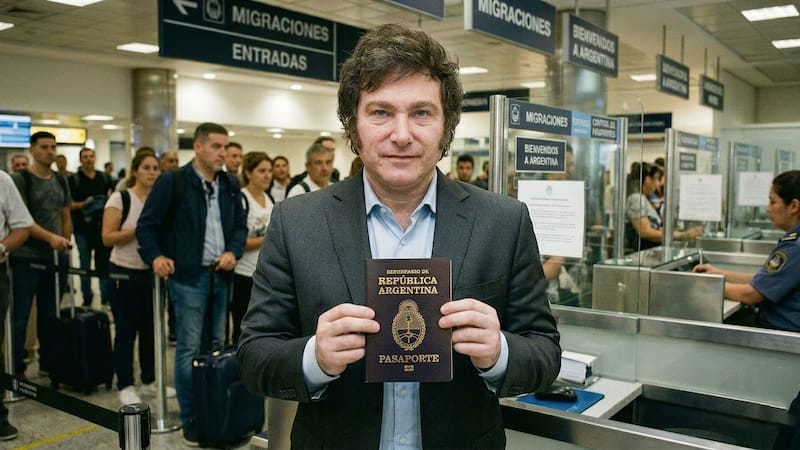
According to this recent ruling, the executive plainly understood that decisions stripping or granting rights need judicial oversight, because it wrote that oversight into the immigration half. Then it skipped the same protection for citizenship, a matter the Argentine Constitution itself singles out specifically. Naturalization cannot be placed beyond the reach of a judge, and this decree tried to do exactly that.
What else just lost its footing
On paper the Volosh case was about one narrow thing: whether a judge or Migraciones decides to grant her Argentine citizenship. But the court did not pick out one bad article, instead it ruled that the entire citizenship reform was an illegitimate use of a decree, because citizenship belongs to Congress and no emergency justified the shortcut.
For anyone in the process or thinking about applying for Argentine citizenship, here is what that means in plain terms (with the standing caveat that none of it is final until the higher courts weigh in):
The two-years-without-leaving rule: Probably one of the most [redacted] parts of Milei’s decree, which suddenly required continuous permanence in Argentina without even leaving for a weekend trip to Santiago or Colonia. The old law asked for two years of “continuous residence,” and for over a century the courts read it like sane people: a normal life with the occasional trip abroad still counted. Article 37 of the decree redefined it, declaring that you reside continuously only if you stayed in the territory the full two years sin haber realizado ninguna salida al exterior, without making a single departure abroad. The two-year residency period itself is written into the Constitution and is not going anywhere. The cruel no-exit gloss bolted on top of it is a pure invention of the decree, so it falls with the rest of Title III. Back to the old framework, and an ordinary life with ordinary travel counts again.
Judges, not only Migraciones: The handoff of naturalization from federal judges to DNM lives in Article 39 of the decree. The court ordered the judge to reassume the case and reminded everyone that naturalization, named in Article 20 of the Constitution, cannot be placed beyond judicial reach. So the judicial route to citizenship is not dead, since this federal chamber just said the courthouse door is still open.
The decree’s own CBI investment route: The decree created a citizenship-by-investment track of its own, a passport for foreigners who make a “relevant investment” no matter how briefly they have lived in Argentina, run by a brand-new investment-citizenship agency under the Economy Ministry. That track is written into the very same Title III the court found unconstitutional, so the decree-based investment route is exposed to the identical challenge as everything else here. That is a different thing from a real citizenship-by-investment framework written as a law and passed by Congress, which would stand on far firmer ground precisely because it would be a law and not a decree.
What this ruling does NOT do
This was a ruling by the Cámara Civil y Comercial Federal, Sala III, a federal appeals court. It is not the Supreme Court. Argentina’s top court could still take the case and rule the other way, and given that this touches a flagship Milei reform, the government has every incentive to appeal.

That said, this is not one stray panel acting alone. More than one of the three divisions of the capital’s federal appeals court has now landed on the same conclusion within days of each other, striking the citizenship provisions on the same reasoning.
The decision resolves a concrete case, the application of one person, and orders the federal judge to take her file back, but it is not an erga omnes strike-down that erases the decree for everyone overnight. In practice, a ruling like this from a federal appeals chamber carries real weight and will be cited by every lawyer fighting the same battle, so the persuasive force is large. The legal status, though, is still “this decree is unconstitutional as applied here,” not “this decree no longer exists.”
The court was also careful about scope. It explicitly left the immigration provisions of the decree alone, even conceding that the urgency argument is at least arguable for migration, where flows really can move fast. The knife came down on the citizenship half, the transfer of naturalization away from federal judges, and nothing more.
And to close the loop on citizenship by investment, since the section above already untangled the two versions: the decree’s own CBI investment route shares the decree’s legal fate, while a proper investment-citizenship law passed by Congress would not. The lesson runs the same direction as the whole ruling. Build the thing on legislation, where this court says it belongs, and it stands. Bolt it onto a decree, and one chamber can knock it over.
What this means for aspiring Argies
One of the key items here that has just lost its legal footing is the insane two-years-without-leaving rule. If you have been chaining yourself to Argentine soil, skipping family visits, weddings or funerals abroad, all to protect a residency clock the decree said one trip would reset, this ruling reopens the older and gentler reading where a normal life with normal travel still counts.

Important to note is that none of it is guaranteed, since the case can still climb to the Supreme Court, the courts that resume these files may still take around two years, and some judges have applied the stricter reading since the reform landed. But the legal basis for the harshest version, the zero-days-abroad rule, is now under direct fire from the capital’s own appellate court.
The Migraciones Mirage
If you were counting on the DNM administrative track to get your carta de ciudadanía quickly, not much will change. Even though the legal foundation under that track just cracked, the administrative track has not actually delivered anything: to date Migraciones has not granted or rejected a single one of these citizenship applications, and my expectation is that everyone who is in the process at Migraciones will now run to the courts after this ruling (with more chance of success).
Going back through a judge is slower but surer, roughly a two-year process, and some applicants may first need to win a constitutional challenge around the decree, which can add another six to twelve months.
If your case was already a grandfathered court proceeding, this ruling is friendly to you. The whole thrust of the decision is that federal judges, with the prosecutor involved, are the constitutionally correct venue for naturalization. Reassuming jurisdiction is exactly what the court ordered.
A few things this does not unlock, so nobody runs off with the wrong idea. It does not let you naturalize after sitting in the country without legal status; isolated cases have squeaked through, but that is not a path to bet on. I won’t name names, but there have been some shady lawyers who promised that even as an illegal immigrant they could get you citizenship, and one of the most notorious ones who shouted that from the rooftops has actually been disbarred.
It also does not let you file and then live abroad while the process runs on its own, because the courts are expected to want you appearing in person and to check that you actually kept residing in Argentina throughout the process (a summary of your entries and exits is always added to each petition). And the underlying residency rules have not changed at all, so there is nothing to do differently on that front.
None of this is legal advice, and this Mara is a Patagonian rodent in a bowtie, not your lawyer. If you have an active file, talk to counsel who is tracking this case in real time, because the ground is moving, and likely in your favor.
A Golden Visa for Argentina: the tools already exist
Leaving the citizenship by investment angle aside for a moment, the goal behind Milei’s doomed decree (pulling capital and talented people into Argentina) does not need a fragile decree at all.
The residency part of it does not need new law either, since the tools for residency by investment in Argentina already exist in the existing migration law, gathering dust because nobody operationalized them properly.
I have been saying for years that Argentina is the best-value sovereign individual play in the hemisphere if you can stomach the chaos or be detached from it if you earn in dollars and spend in pesos.


The missing piece for a Golden Visa was never the law, but a government willing to make the existing law actually work for the high-net-worth resident it claims to want to attract.
I work with many Buenos Aires immigration lawyers and drafted the whole thing: a plug-and-play residency reform, ready to sign, that could be live the day it hits the Boletín Oficial, the official gazette.
The problem nobody fixed
Argentina has a rentista category (residency for people living off passive income, which is the most used route by far to obtain residency for non-Mercosur citizens) and an inversionista category (residency for investors).
Both have existed for over twenty years, and on paper they are exactly what a country competing for capital should offer. In practice they are a bureaucratic obstacle course that punishes the precise profile Argentina should be courting.
The rentista track demands proof of periodic passive income, which ignores how most wealthy people actually hold money. If your net worth sits in a brokerage account or a fund that compounds rather than paying you a monthly check, you have been forced to liquidate positions just to show a cash flow you do not need. The system also asks you to wire your money into the country before your residency is approved, which is backwards, because opening a local bank account is practically impossible without having a DNI in hand.
The inversionista category, on the books since 2003, has no working procedure at all, so the foreigner who just bought an apartment cannot turn that purchase into residency. And the physical-presence rule of six months a year lands hardest on exactly the mobile, internationally connected person whose capital you are trying to attract.
None of these requirements are written into the law, but they are administrative habits installed by past regulations. And regulations are far easier to change than laws.
The Golden Visa fix that needs no decree
The package I am proposing is four reforms, delivered through instruments the executive can sign on its own authority. Here is what changes:
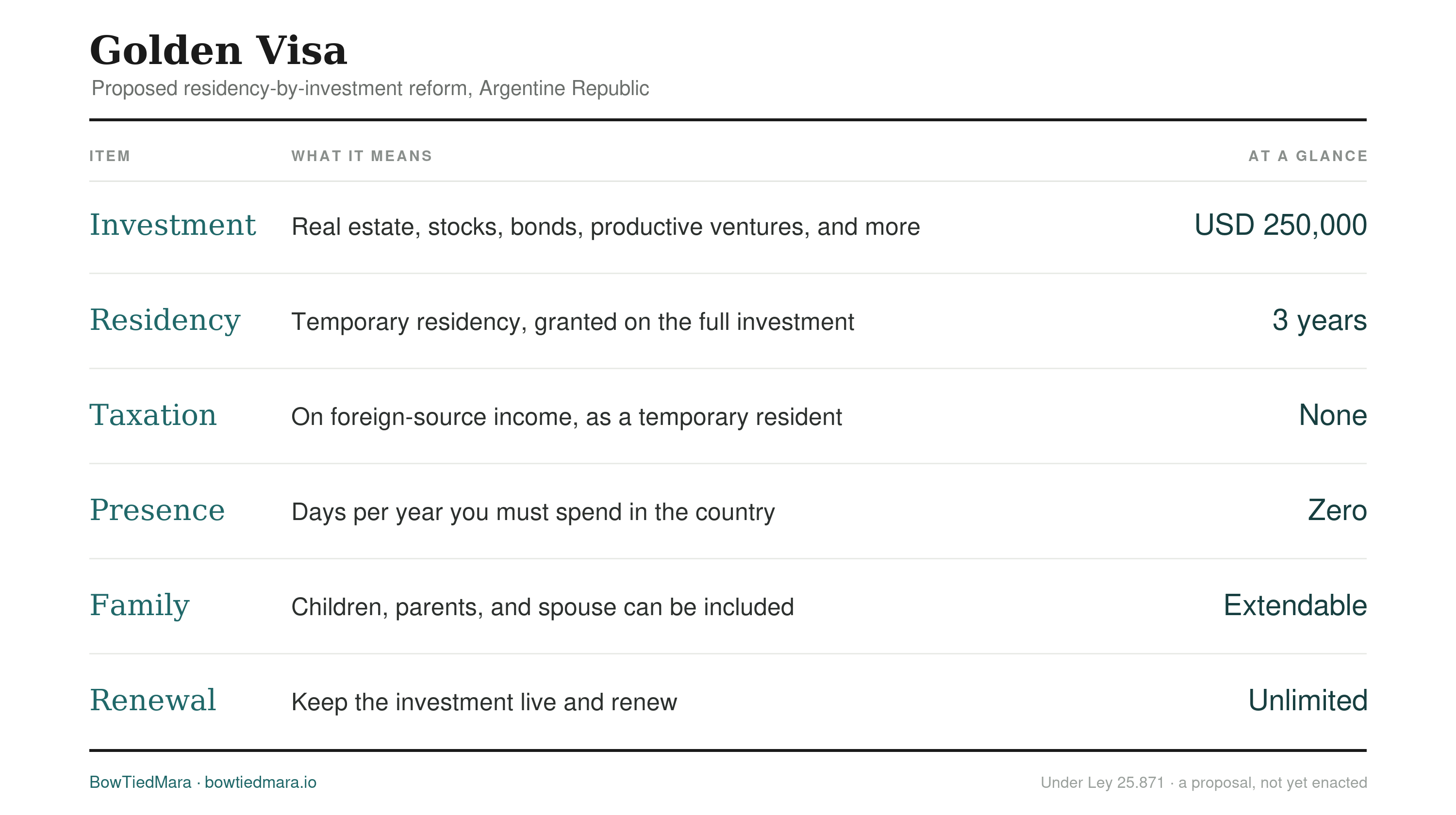
The rentista track gets a second door: Keep the existing passive-income path (USD 1,500 a month from foreign assets, minimum one year). Add a new path based on global net worth: show USD 250,000 in lawful assets held abroad, of any kind, and you qualify, no proof of monthly yield required. Stocks, funds, real estate, company stakes, bank deposits, even documented savings from your salary all count. That path grants a full three-year residency. The requirement to wire money into the country moves to your first renewal instead of being a gate at the start. Argentine notarial instruments and certified-accountant statements get put on equal footing with foreign paperwork.
The inversionista track finally works: Hold USD 250,000 in Argentine assets (property, local financial instruments, stakes in Argentine companies, productive ventures) and you get a three-year residency. Or use the partial route: start with 20%, USD 50,000, and commit to completing the investment within one year.
With regards to physical presence, the rigid six-months-in-country rule is replaced by three equivalent tests. You satisfy it if the holder is present 180 days a year, or a household family member is, or, for investors, the qualifying assets remain demonstrably live in the country. Come in on net worth, stay in on investment.
Why this beats what the government already tried
This package creates no new agency, needs no budget line, and depends on no appointments or drawn-out rollout. The residency reforms run entirely through existing authority in Ley 25.871, signed as DNM Disposiciones. They can be in force the day they are published.
Contrast that with what the government actually did: Decree 366/2025 created a brand-new Agencia de Programas de Ciudadanía por Inversión, and that agency has spent months waiting to do anything at all. The decree’s online citizenship procedure took four months to appear and ten months to come with instructions, and is still not working. That is the difference between reform that works on paper and reform that works on Tuesday.
This is deregulation that actually attracts capital, which is supposed to be the entire brand. No hay plata, and one of my main goals is for plata to start arriving in bulk in Argentina, whether it be through a CBI or RBI Golden Visa.
There is also a measurement kicker built in, just like the Portugal Golden Visa program which has been extremely successful: the package requires Migraciones to publish a twice-yearly statistical report, broken down by nationality, asset type, declared capital, and region.
Every approved file becomes a hard data point on how much the world trusts Argentina as a place to live and invest. For a government that loves a good chart, that should sell itself.
All of the proposed reforms are as solid as tungsten: they are administrative reinterpretations of powers Migraciones already has, no new law, no decree, nothing a court can call legislative overreach.
The Plug & Play Golden Visa Text
Below you can find the entire package, every Disposición and the accompanying decree, ready to take off the shelf. It has been shaped with people who run these files for a living. If anyone in a position to move on this wants it, it is done. No consulting engagement to commission, no committee to form. The draft is below. Call us.
The goal is to get this up and running and get a lluvia de inversiones going from foreign investors on an individual basis.
You can read the full proposed text in both Spanish and English. The Spanish version is the operative document, workshopped with experienced immigration practitioners. The English version is a translation for international investors, immigration lawyers, and anyone in the global residency-and-citizenship world who wants to see what a serious Argentine Golden Visa could look like.
Downloads:
Spanish original: Proyecto de Reforma del Régimen de Residencia (Rentista e Inversionista):
English translation: Proposed Argentine Residency Reform (Rentier and Investor):
If you are weighing Argentina as a base, a second home, or an investment play, this is the framework I would want you operating under, and the one worth pushing the government to adopt. Tell them an internationally mobile gnawer sent you.
See you in the Jungle, anon!
BowTiedMara covers Argentine macro, real estate, citizenship and residency, and sovereign individual strategy from the ground in Buenos Aires. For 1x1 consultations on residency, citizenship, and investing in Argentina, or to follow along on X and YouTube, see the links below.
1x1 Consultations: book a 1x1 consultation for more information about obtaining residency, citizenship or investing in real estate in Argentina here.
Propertyinbuenosaires.com: personal resource website with everything you need to know about buying and selling property in Argentina.
ArgInvesting.com: new project — a mini-Bloomberg for Argentina. Live FX, BCRA, inflation and bond data with interactive charts, plus the full Macro Pulse report. Built off the Argentina Macro Pulse you’ve read here.
X/Twitter: definitely most active here, you can also find me on Instagram but I hardly use that account.
Podcasts: You can find previous appearances on podcasts etc here.
YouTube: Check out my channel for real estate info and more.
WiFi Agency: My other (paid) blog on how to start a digital agency from A to Z.